Guide
Living at home during an extension
Many people stay in their home while an extension is built. It can work well with some planning. This guide covers the practical questions: where you will cook, how to cope with dust and noise, how the site is accessed and kept safe, and how to look after children and pets.
Last reviewed: 2 October 2026
General guidance. Whether it makes sense to stay depends on your house, the size and phasing of the work, and your household. Talk it through with your builder before you decide.
Planning an extension?
Short answer
You can live in a house during an extension, but expect some disruption, and plan for it before work starts. The biggest questions are usually the kitchen, dust, access and safety, and how your household copes with noise. Larger projects, work that opens up the main part of the house, or households with very young children, anyone working from home or anyone with health needs may find it easier to move out for part of the job. Ask your builder to explain the phasing and which rooms will be affected, and when.
Decide: stay, move out for part of it, or move out
Questions to ask yourself and your builder:
- Which rooms will be out of use, and for how long?
- Will the kitchen be out of action, and will the water, gas and electricity be off at any point?
- Is there a part of the house that stays quiet and usable, such as a bedroom floor?
- Does anyone work from home, study, or need quiet during the day?
- Would staying with family or a short let for the noisiest stage be an option?
There is no right answer. If you are unsure, ask for the programme phases in writing and decide stage by stage.
Planning the kitchen
If the extension includes the kitchen, you may lose the main one for a time.
- Set up a temporary kitchen in another room, such as a dining room, utility or spare room. A kettle, microwave, toaster, a small table-top hob and a sink or washing-up bowl cover the basics.
- Plan for water. A temporary kitchen away from a sink means washing up in a bathroom, so set up a spot for it.
- Plan meals around what you can manage: batch cooking beforehand, ready meals, and eating out sometimes.
- Ask your builder when the water and gas will be off, and what the plan is for reconnecting them.
- Order the new kitchen early enough that it is ready when the space is.
Dust and noise
Building work makes dust and noise, and some of it will find its way into the rest of the house.
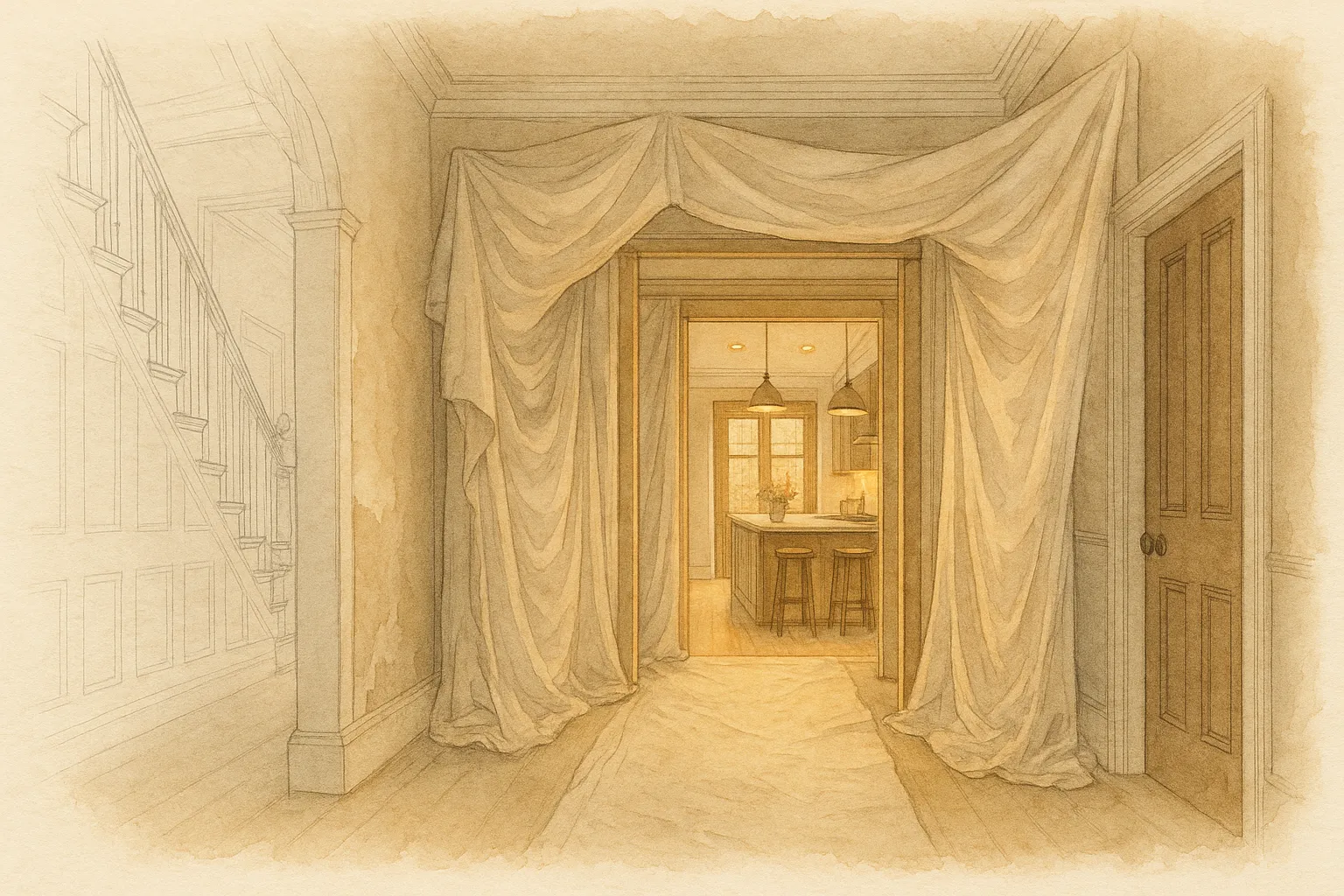
- Ask how the work area will be separated from the living areas. Temporary dust screens or sealed doors are common.
- Cover or move furniture, and take valuables and fragile items out of the rooms nearest the work.
- Expect cleaning to be a regular job. Some people keep a dedicated pair of indoor shoes or a mat at the boundary.
- Dust can bother people with breathing problems. If this applies to someone in your home, tell your builder at the start so you can agree what to do.
- Noise is loudest at demolition and when the old rear wall is opened up. Ask when the noisiest stages are expected, so you can plan to be out of the house or to work elsewhere on those days.
- Neighbours will hear the work too. A word beforehand helps, and it fits well with any party wall conversation.
Access, security and parking
- Think about how workers and materials get to the back of the house. In a terrace, that may be through the house itself, or via a side passage if there is one. Ask your builder to confirm the route and how floors, walls and furniture will be protected.
- Agree where deliveries and skips will go. They may need parking permission or a licence from the council, which your builder can advise on.
- Agree working hours and any restrictions, for example no work early or late.
- Agree who has keys or door codes, who is on site when you are out, and how the house is locked up at the end of the day.
- Tell your household insurer about the work. Some policies need to be notified, and the position on cover during building work is a question for your insurer.
Safety on site
A building site is not a safe place for visitors, especially children and pets.
- Keep the work area separated and out of bounds. Agree where the boundary is, and have a lockable or secured door to it where possible.
- Keep tools, ladders, materials and open excavations out of reach. Ask your builder to leave the site tidy and secured every evening.
- Check that exits and escape routes stay clear, and that smoke alarms stay working where building work is nearby. Ask your builder to tell you if any alarm needs to be moved or disabled, and when it will be back.
- Take care at the end of the day, when partly built floors and temporary openings may be present.
- Ask your builder how electricity and gas will be made safe when they are being worked on.
Children
- Explain the rules in terms they understand, and show them the boundary.
- Plan a spot at home that is theirs and is away from the noise and dust, for play and sleep.
- Think about naps, schoolwork and exams, and agree quiet periods with your builder where possible.
- Plan trips out for the noisiest days.
Pets
- Dogs and cats may be stressed by noise, strangers and open doors. Think about a quiet room, a safe kennel or a friend or relative looking after them on the loudest days.
- Keep doors and gates between the work area and the garden closed so a pet cannot slip out. Tell workers that a pet is in the house.
- Keep pets away from dust, sharp offcuts, dropped screws and chemicals.
- Keep up the usual routines for feeding and walks as far as possible.
Working from home
- Ask for the noisiest work to be scheduled for days you can be elsewhere, where possible.
- Check your broadband and power plans, since power can be off at times. Charge laptops and phones before known interruptions.
- A library, co-working space or a family member’s house can fill in on the worst days.
Staying in touch with your builder
- Agree a single point of contact and how you will hear about the day’s plan.
- Agree how problems and changes are raised and recorded.
- Ask for a heads-up before any day when water, power or gas will be off, or when access through the house is needed.
Frequently asked questions
Can we live at home during an extension?
Often yes, but it depends on the size of the project, which rooms are affected and your household. Ask your builder to explain the phasing and decide stage by stage.
What do we do about the kitchen?
Set up a temporary kitchen in another room, with basics such as a kettle, microwave and somewhere to wash up. Ask your builder when water and gas will be off.
How do we keep dust under control?
Ask how the work area will be separated from the rest of the house, keep doors closed, cover furniture and expect regular cleaning. If someone has breathing problems, tell your builder at the start.
Is a building site safe for children and pets?
No. Keep the work area out of bounds, secured and tidy at the end of each day, and plan a safe, quiet space for children and pets away from it.
Should I tell my insurer?
It is worth asking your insurer whether they need to be told and what cover applies during building work. We cannot advise on your policy.
Do I need to be at home while work is going on?
That depends on what you agree with your builder about access and security. Ask about keys, who is on site and how the house is secured each day.